
Does Spotify Know You Better Than The NSA & Your Best Friend?
A Guide To... The Sophisticated Data Science

Last week a friend reached out asking "is there a way to track demographic streaming and social data based on specific regional centres..." This took me on a journey into the depths of behavioural learning, data science, and geographic specific algorithmic architecture. So what did I discover?
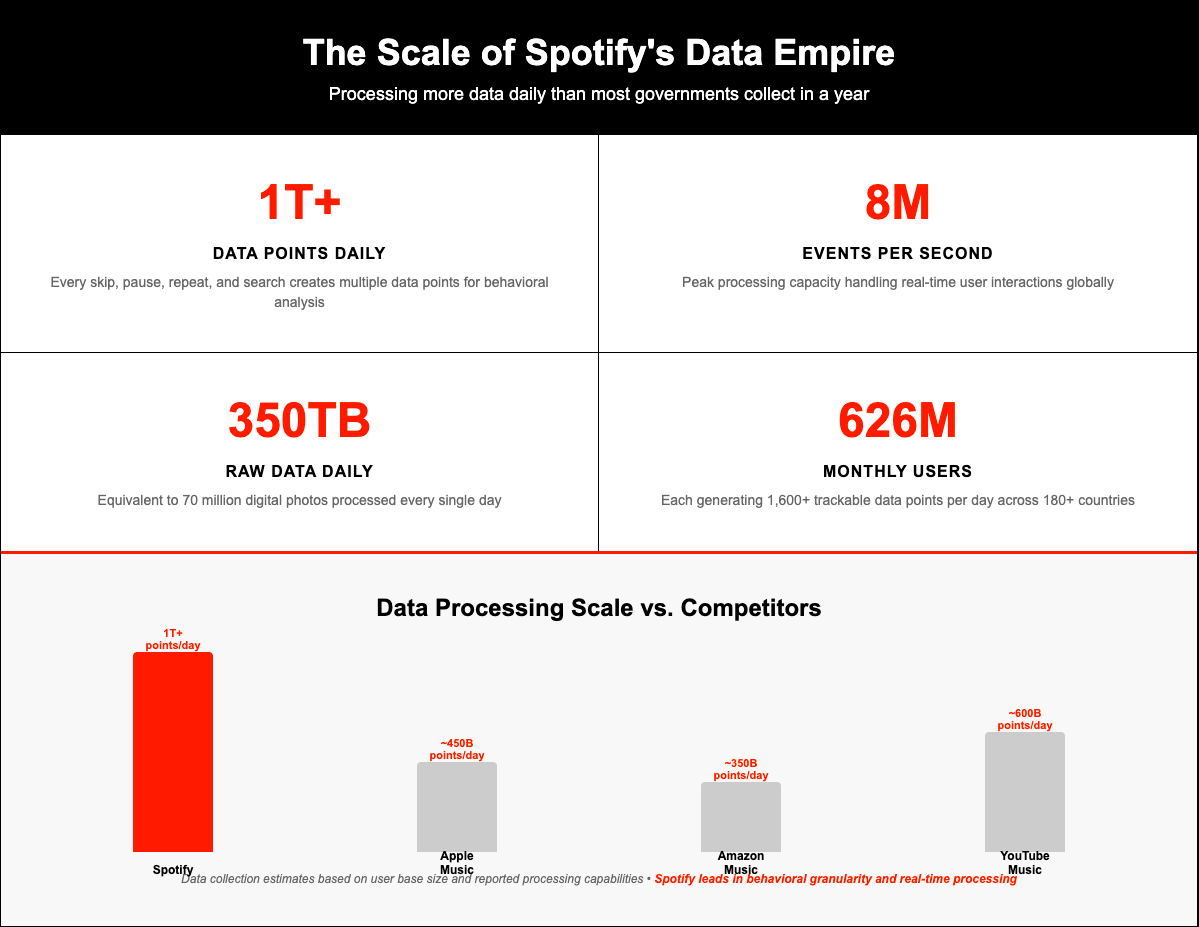
Spotify processes over 1 trillion data points daily, creating detailed behavioural models that enable remarkably precise personalisation. Through comprehensive geolocation analytics, listening pattern analysis, and real-time context awareness, streaming platforms have built the most sophisticated consumer intelligence operations in the digital economy, and they're using that intelligence to transform how we discover and experience music.
The technical achievement is extraordinary. Modern streaming platforms can determine not just what you like, but when and where you'll want to hear it, adapting in real-time to your location, activity, and emotional state. This represents a fundamental evolution from passive music libraries to intelligent, context-aware entertainment systems that anticipate and enhance daily experiences.
To understand how this data intelligence operation works at scale, we need to examine the sophisticated technical infrastructure that makes such comprehensive behavioural tracking possible.
Technical Infrastructure: The Foundation of Digital Intelligence
Spotify's event delivery infrastructure processes over 8 million events per second at peak usage, handling 350+ terabytes of raw data daily. This massive data processing capability enables real-time personalisation that would have been impossible just a decade ago, creating music experiences that adapt instantly to changing contexts and preferences.
The platform employs multiple data collection methods to understand user context: IP geolocation for region-appropriate content, device sensor data for activity recognition, and temporal pattern analysis for routine identification. This multi-source approach enables sophisticated features like automatic commute playlists, workout music that adapts to exercise intensity, and location-based discovery of regional music scenes.
But this massive processing capability exists for one primary purpose; to capture and analyse every possible signal about user behaviour and context. The infrastructure reveals the true scope of data collection happening behind the scenes.
Advanced Analytics Technology: Reading Minds Through Music
Patent US10,891,948 reveals one of Spotify's most impressive innovations; personality inference technology that analyses listening behaviour to understand individual psychological profiles. The system processes 17.6 million songs and 662,000+ hours of listening data to create personalised interfaces that match individual personality types. Extroverts might see more social sharing features, whilst introverts receive more solitary discovery tools.
The speech recognition capabilities enable context-aware recommendations through environmental audio analysis. The system can detect whether you're in a car, at home, or in a social setting, automatically adjusting music selection to match the acoustic environment. This creates seamless experiences where music naturally fits your physical and social context without manual adjustment.
The raw data collection is only the foundation, however. The real power lies in how platforms transform this behavioural data into actionable intelligence about users' lives, relationships, and psychological profiles.
Intelligence Applications: From Data Points to Life Mapping
The intelligence gathered through these systems enables remarkable commercial applications that benefit both users and the broader music ecosystem. Location-based analytics help streaming platforms understand regional music preferences, enabling better support for local artists and more culturally relevant content discovery.
City Pulse charts, covering 200+ cities globally, showcase music that's distinctively popular in specific locations—tracks with high local popularity but lower global reach. This feature has become invaluable for travellers wanting to discover local music scenes and for artists seeking to understand their geographic appeal patterns.
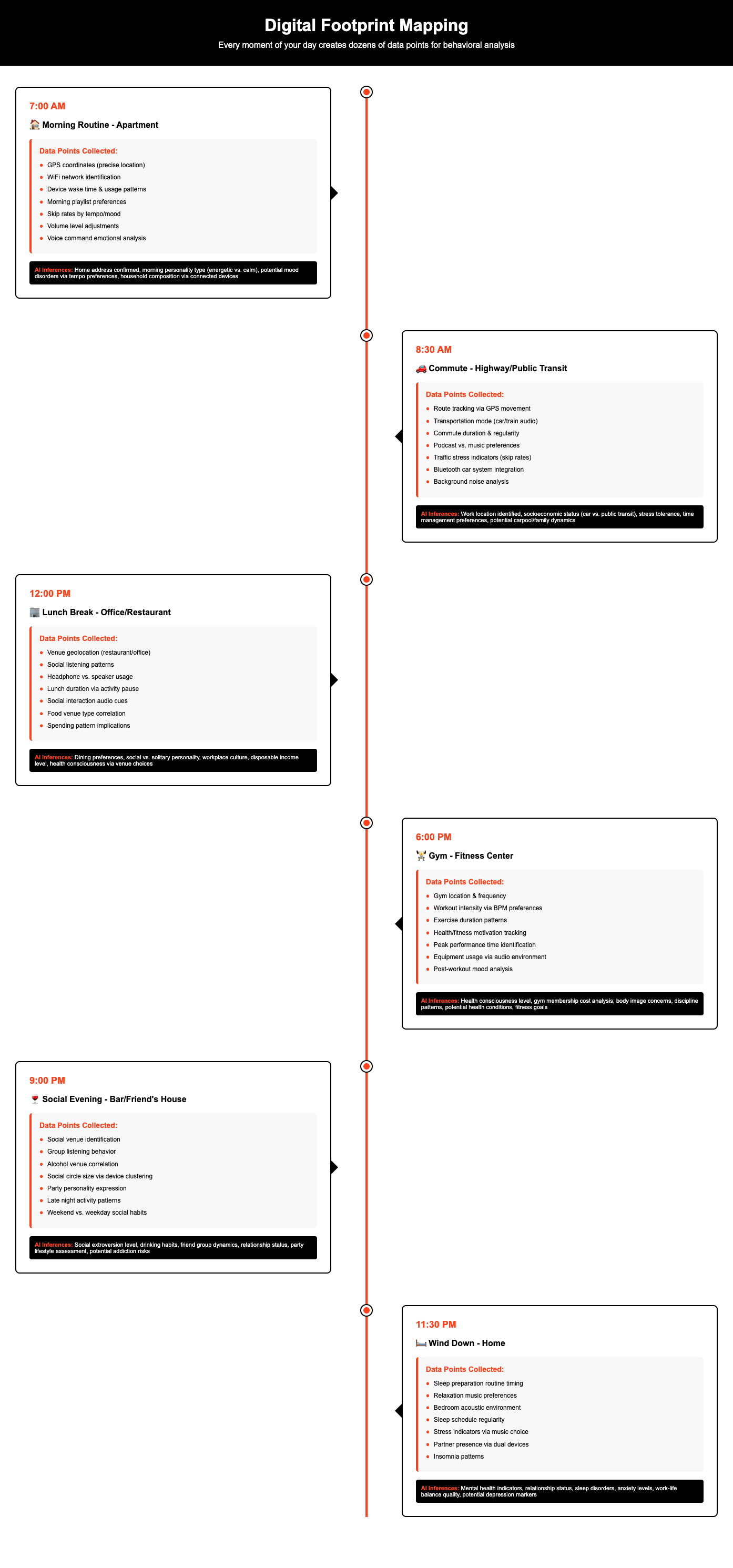
Real-time behavioural analysis enables dynamic playlist generation that adapts to daily routines. The system learns that users prefer energetic music during morning commutes, focus-friendly instrumental tracks during work hours, and relaxing content during evening wind-down periods. This temporal intelligence creates more valuable experiences than static playlist approaches.
Social behaviour analysis through simultaneous streaming detection enables sophisticated features like collaborative playlists that automatically sync across friend groups at events, or family-friendly content filtering when multiple household members are present. These applications demonstrate how behavioural intelligence creates genuine social value.
The data enables unprecedented artist insights through geographic performance analytics, audience demographic analysis, and real-time engagement metrics. Artists can identify their strongest markets, understand audience preferences, and optimise tour routing based on actual fan density rather than guesswork.
The most impressive applications focus on enhancing daily music experiences through contextual intelligence. An example of this was the University playlists by the legendary data wizard, Glenn McDonald whilst he was at Spotify. The playlists covered 3,000+ educational institutions, showcasing music popular on specific campuses whilst surfacing local student artists and campus-touring acts. This created authentic cultural discovery that traditional recommendation algorithms couldn't achieve.
Workout integration demonstrates sophisticated activity recognition, with algorithms detecting exercise patterns through device sensors and automatically curating music with appropriate tempo, energy levels, and motivational characteristics. The system learns individual workout preferences and adapts recommendations based on exercise type, duration, and intensity patterns.
Travel-aware features represent particularly sophisticated applications, with algorithms detecting location changes and automatically introducing region-appropriate music whilst maintaining familiar preferences. Users travelling to new cities receive curated introductions to local music scenes without losing access to their preferred artists and genres.
Mood detection through listening pattern analysis enables emotional support features, with algorithms identifying periods of stress, sadness, or celebration and adjusting recommendations accordingly. This creates music experiences that provide genuine emotional value beyond simple entertainment.
The collaborative filtering systems, analysing 700+ million user-generated playlists, identify nuanced preference patterns that enable discovery of highly compatible new artists. This social intelligence surfaces music recommendations that feel personally curated whilst introducing genuinely surprising and delightful content.
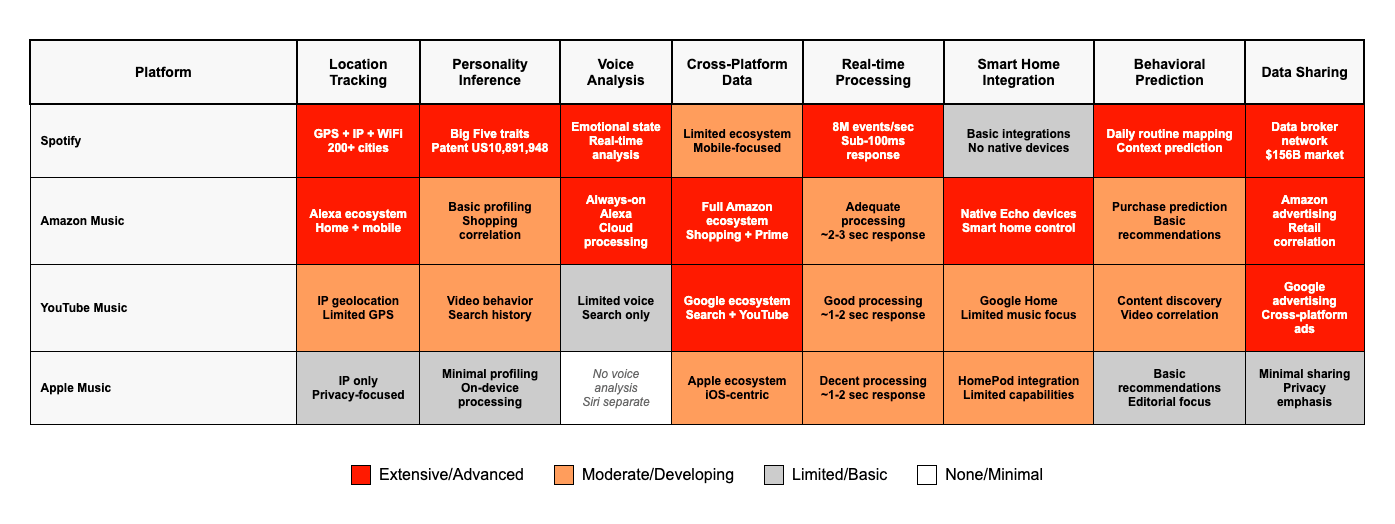
Whilst Spotify leads in data intelligence sophistication, each major platform has developed distinct approaches to behavioural tracking that reveal different philosophical and technical priorities.
Platform Variations: Different Approaches to Data Intelligence
Different streaming platforms employ varied data collection strategies that reflect their broader business philosophies and technical capabilities. Apple Music emphasises privacy-focused personalisation with minimal location tracking, using primarily IP-based geolocation whilst emphasising on-device processing. This approach creates solid recommendations whilst maintaining stronger privacy protections.
Amazon Music leverages comprehensive ecosystem integration through Alexa-enabled devices, enabling sophisticated home automation features like location-based music triggers, voice-controlled playlist creation, and integration with smart home routines. Users can create complex scenarios where music automatically adapts to household activities, lighting conditions, and daily schedules.
YouTube Music benefits from integration across Google's services, enabling unique features like music discovery through video content, lyrics-based search capabilities, and recommendation enhancement through search history and YouTube viewing patterns. This cross-platform intelligence creates discovery experiences that purely audio-focused platforms cannot match.
Pandora's Music Genome Project analyses 450+ musical attributes for each song, enabling sophisticated content-based recommendations that excel at musical discovery based on acoustic characteristics rather than social trends. This approach creates value for users seeking music similar to specific tracks or artists.
European platforms like Deezer emphasise transparency and user control, providing detailed explanations of recommendation algorithms and offering granular privacy controls. This approach demonstrates how sophisticated personalisation can coexist with strong user agency and privacy protection.
For artists and industry professionals, understanding these data intelligence capabilities isn't just about privacy concerns; it's about recognising how fundamentally these systems reshape the music business itself.
Industry Impact: How Data Intelligence Changes the Music Business
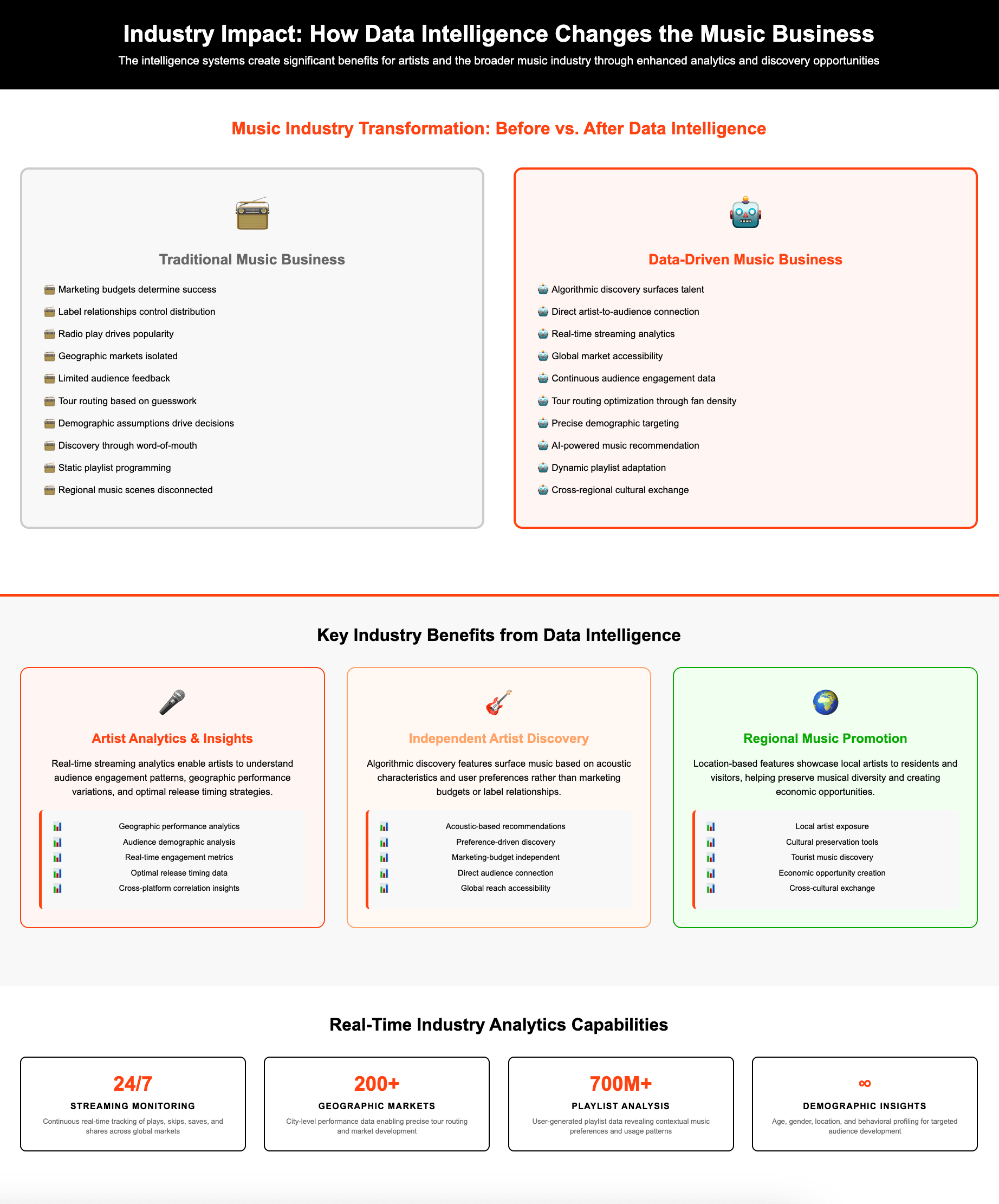
The intelligence systems create significant benefits for artists and the broader music industry through enhanced analytics and discovery opportunities. Real-time streaming analytics enable artists to understand audience engagement patterns, geographic performance variations, and optimal release timing strategies.
Independent artists benefit particularly from algorithmic discovery features that surface music based on acoustic characteristics and user preferences rather than marketing budgets or label relationships. The democratisation of music discovery through intelligent algorithms has enabled countless independent artists to find audiences they never could have reached through traditional promotion methods.
Regional music scenes receive enhanced exposure through location-based features that showcase local artists to residents and visitors. This geographical intelligence helps preserve and promote musical diversity whilst creating economic opportunities for artists in smaller markets.
The data enables more efficient music industry operations through improved tour routing recommendations, venue capacity optimisation, and audience demographic insights. Artists can make data-driven decisions about market development, collaboration opportunities, and strategic career planning.
Playlist analytics provide artists with detailed insights into how their music performs in different contexts, enabling optimisation of new releases for specific listening scenarios like workout playlists, study sessions, or social gatherings.
However, this level of data collection naturally raises important privacy considerations that platforms are increasingly being forced to address through enhanced user control mechanisms and regulatory scrutiny.
Privacy Considerations: Balancing Personalisation with User Control
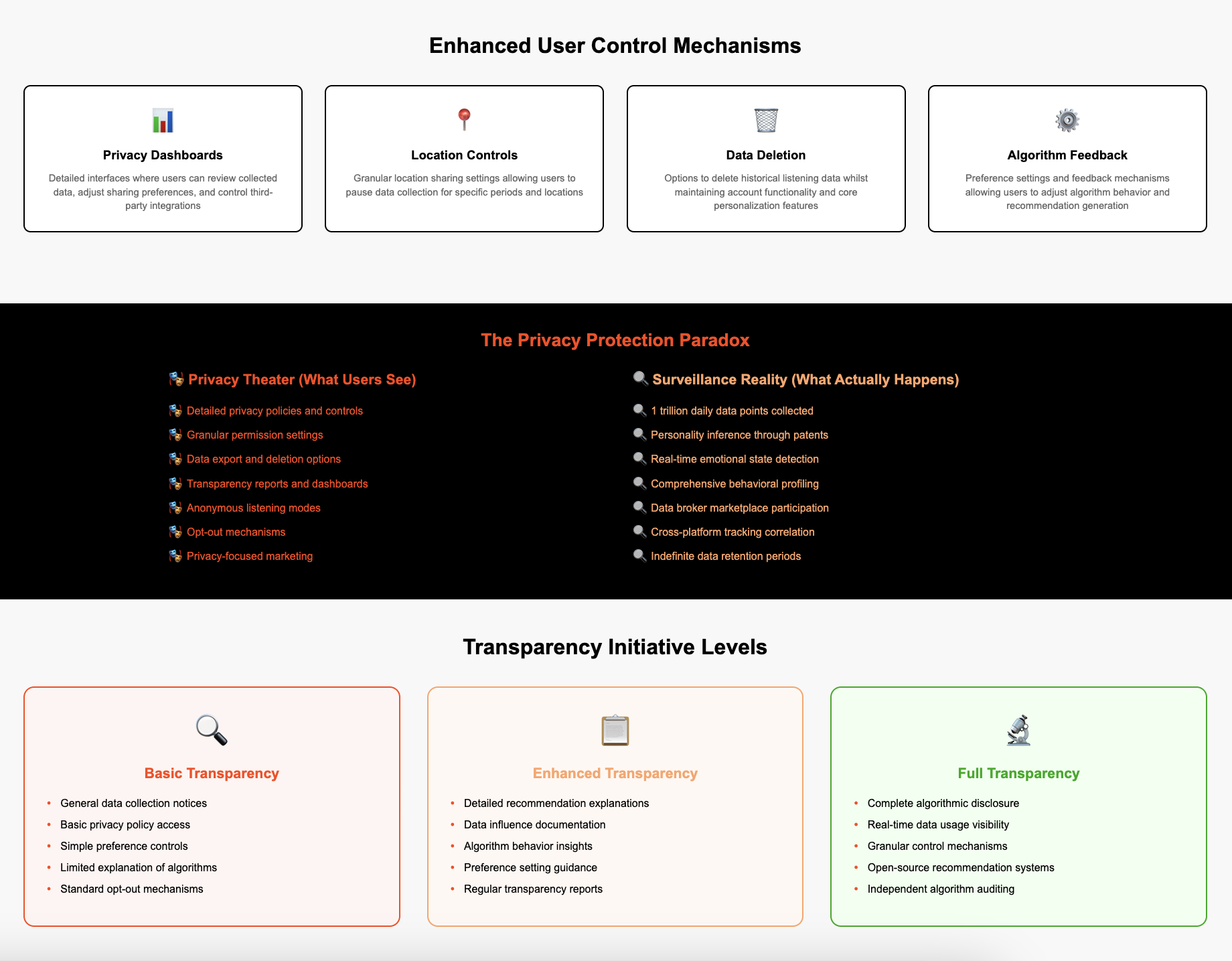
The sophistication of data collection naturally raises important privacy considerations that platforms are increasingly addressing through enhanced user control mechanisms. Modern streaming services provide detailed privacy dashboards where users can review collected data, adjust sharing preferences, and control third-party integrations.
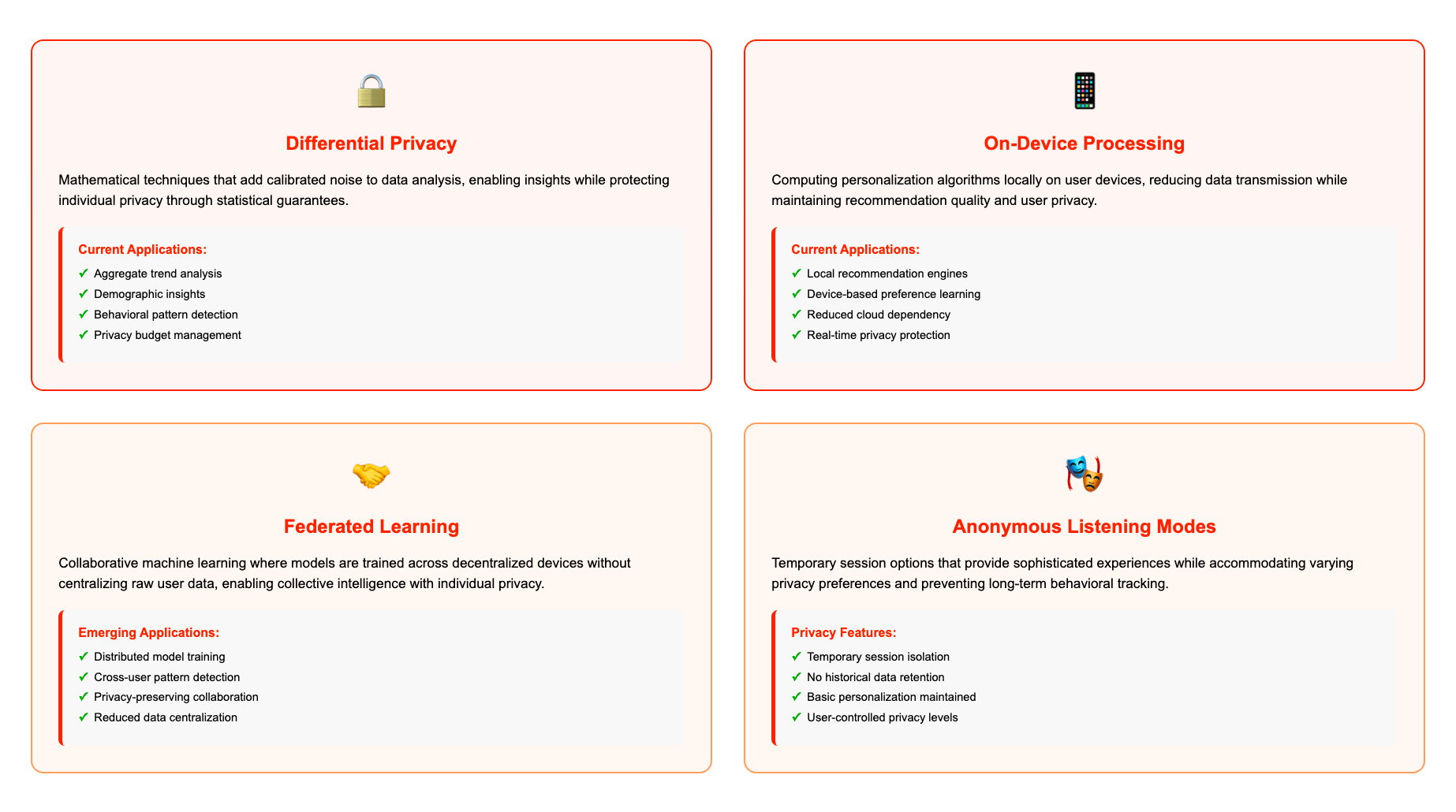
Privacy-preserving techniques like differential privacy, federated learning, and on-device processing enable sophisticated personalisation whilst reducing data exposure risks. These technical approaches demonstrate how innovation can enhance both functionality and privacy protection simultaneously.
User control features include granular location sharing settings, the ability to pause data collection for specific periods, and options to delete historical listening data whilst maintaining account functionality. These controls provide meaningful choice over data usage without eliminating personalisation benefits.
Transparency initiatives include detailed explanations of how recommendations are generated, what data influences algorithmic decisions, and how users can adjust algorithm behaviour through preference settings and feedback mechanisms.
The emergence of privacy-focused features like anonymous listening modes and temporary session options demonstrates how platforms can provide sophisticated experiences whilst accommodating varying privacy preferences.
Yet these privacy protections remain largely cosmetic compared to the depth and sophistication of the underlying data intelligence apparatus. Regulatory responses have begun to address these concerns, though enforcement has been inconsistent.
Regulatory Response: Catching Up with Technology
The regulatory landscape is evolving to address data collection practices whilst preserving innovation benefits. The 2024 Federal Trade Commission report on streaming platform practices led to improved transparency requirements and enhanced user control mechanisms rather than restrictions on beneficial features.
California's CCPA compliance investigations have resulted in clearer opt-out mechanisms and more granular control over data sharing, whilst preserving the core functionality that users value. This balanced regulatory approach demonstrates how oversight can enhance rather than restrict beneficial innovation.
European GDPR implementation has driven development of privacy-preserving technical approaches that maintain personalisation quality whilst providing stronger user protection. The regulation has sparked innovation in privacy-enhancing technologies that benefit users globally.
Industry self-regulation through organisations like the Digital Advertising Alliance has established standards for data collection transparency and user control that exceed minimum regulatory requirements. These voluntary standards demonstrate industry commitment to responsible innovation.
The emerging consensus focuses on user agency and transparency rather than restrictions on beneficial data uses, recognising that intelligent personalisation creates genuine consumer value when implemented responsibly.
As regulatory frameworks slowly catch up with technological capabilities, the industry continues advancing toward even more sophisticated intelligence systems powered by artificial intelligence.
The AI Revolution: Intelligence Gets Smarter
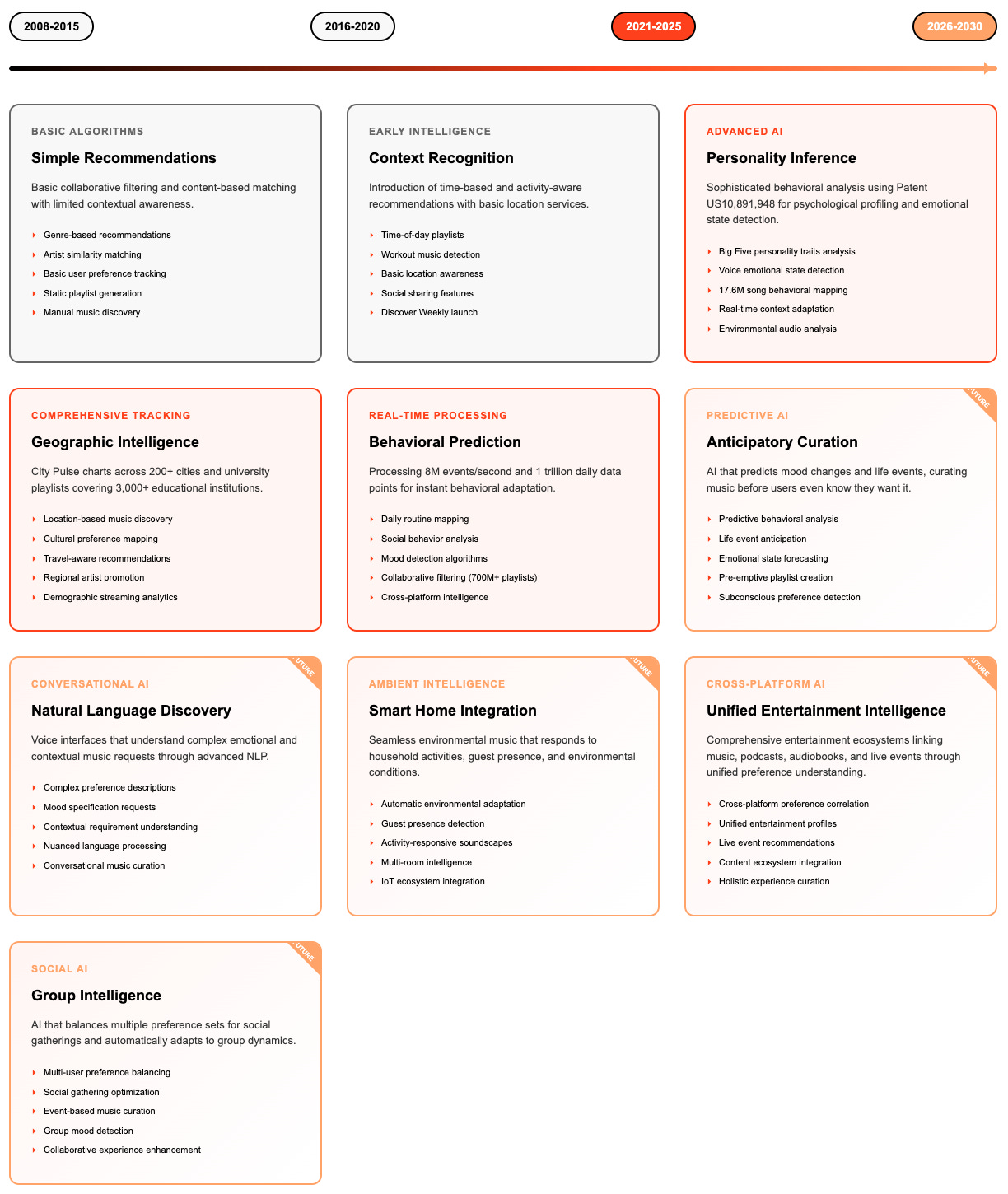
Artificial intelligence integration represents the next frontier in streaming platform intelligence, with predictive behavioural analysis enabling anticipatory music curation that adapts to changing moods, activities, and social contexts. These developments promise even more sophisticated and valuable user experiences.
Cross-platform integration will enable comprehensive entertainment ecosystems where music streaming intelligence enhances other digital experiences, from podcast recommendations to audiobook selection and live event discovery. This convergence creates value through unified preference understanding across entertainment categories.
Voice interface evolution will enable more natural music discovery through conversational AI that understands complex preference descriptions, mood specifications, and contextual requirements. Users will be able to request music using natural language that captures nuanced requirements impossible to express through traditional interfaces.
Smart home integration will create ambient music experiences that respond automatically to household activities, guest presence, and environmental conditions. This represents evolution from manual music selection to intelligent environmental enhancement that adapts seamlessly to daily life.
Social features will leverage behavioural intelligence to enhance group music experiences, from automatic collaborative playlists that balance multiple preference sets to event-based music curation that adapts to social gathering dynamics.
These technological advances raise fundamental questions about the balance between convenience and privacy, and what the future holds for user agency in an increasingly data-driven digital landscape.
Implications: The Future of Digital Personalisation
The streaming platform intelligence revolution demonstrates how sophisticated data collection can create genuine consumer value whilst raising legitimate privacy considerations that require thoughtful management. The key lies in transparency, user control, and technical innovation that enhances both functionality and privacy protection.
The commercial applications of streaming intelligence extend far beyond simple recommendation improvements, enabling new forms of cultural discovery, artist support, and social connection through music. These benefits justify the technical sophistication whilst requiring responsible implementation approaches.
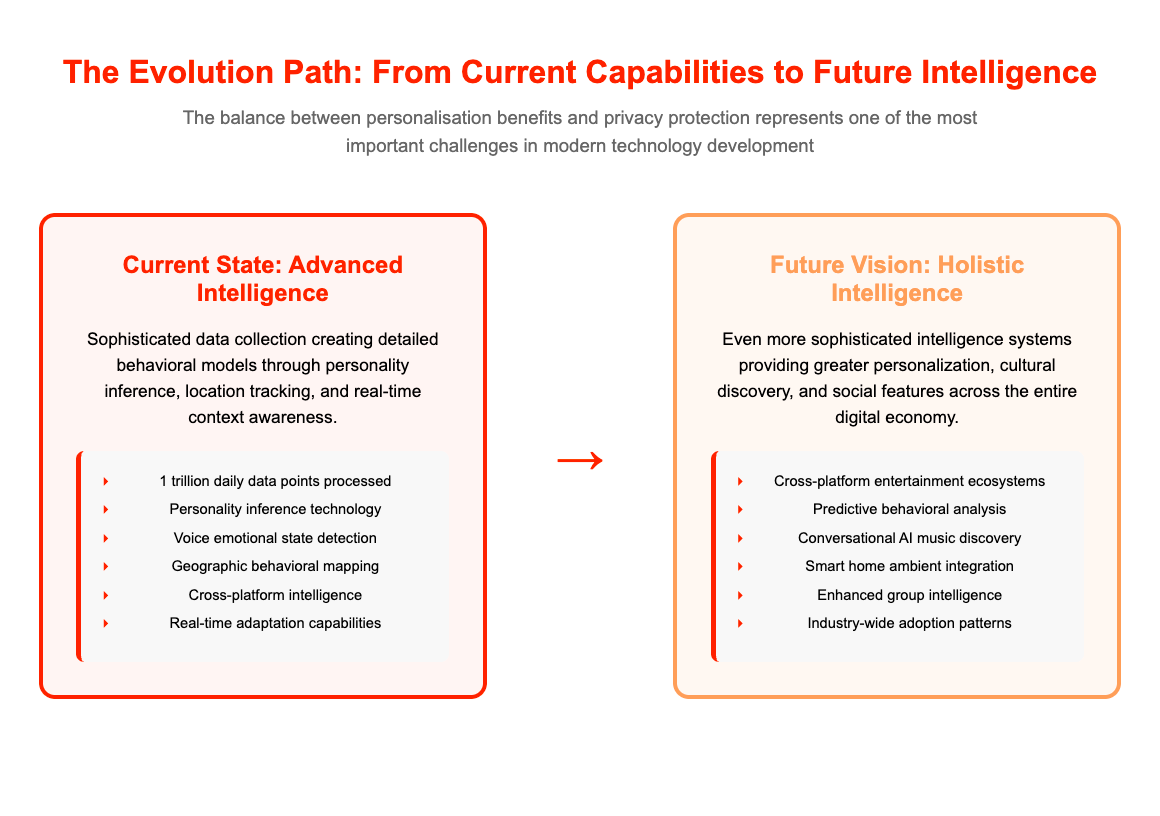
The future of music streaming will likely involve even more sophisticated intelligence systems that provide greater personalisation, cultural discovery, and social features. Success will depend on maintaining user trust through transparency, control, and genuine value creation rather than exploitative data practices.
The balance between personalisation benefits and privacy protection represents one of the most important challenges in modern technology development. Streaming platforms, as leaders in consumer AI applications, are pioneering approaches that will influence how intelligent systems develop across the digital economy.
The goal should be maximising the genuine benefits of intelligent personalisation whilst providing users meaningful control over their data and privacy. The streaming platform industry's evolution in this direction will determine whether intelligent systems enhance human experiences or merely extract value from user monitoring.
The music streaming intelligence revolution isn't just about better playlists; it's about creating technology that genuinely understands and enhances human experiences whilst respecting individual agency and privacy. Getting this balance right will determine the future of intelligent digital services across all industries.
Epic work
Brilliantly detailed article!